






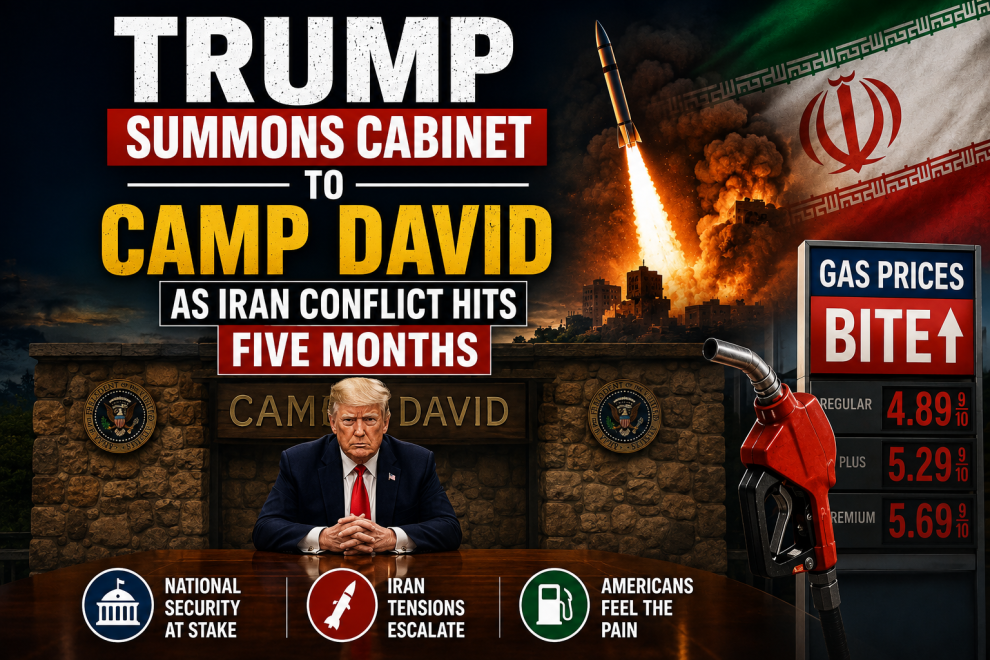

President Donald Trump brought his full Cabinet to the Camp David retreat in Maryland on Friday for a lengthy strategy session, as the military campaign against Iran enters its fifth month with no clear end in sight and gasoline prices continue to climb.
The meeting is only the third time Trump has used the wooded presidential compound in his second term. He has mostly preferred his own golf properties when leaving the White House. White House press secretary Karoline Leavitt had previewed the gathering earlier as the 13th Cabinet meeting of the term and described it as “a lot of fun and something different for the cabinet to experience together.”
According to people familiar with the planning, the discussion centered heavily on foreign policy and the economic fallout from the conflict. Trump launched a series of tit-for-tat strikes against Iranian targets earlier this year, telling the public at the time that the operation would last only a few weeks. Five months later, the exchanges continue with no negotiated off-ramp announced.
The prolonged fighting has pushed U.S. gasoline prices higher, creating political headaches for Republicans looking ahead to the November midterm elections. A Reuters-Ipsos poll released this week found that only one in three Americans currently support the war—the lowest level of public backing recorded since the opening days of the campaign. The numbers have unsettled some Republican lawmakers who worry the combination of higher fuel costs and an open-ended military commitment could cost them seats in Congress.
Trump’s Cabinet sessions typically run well over an hour. Each secretary delivers updates from their department, often laced with public praise for the president. After the Camp David meeting, Trump was scheduled to fly to his Bedminster golf club in New Jersey for the weekend.
The White House has not released a detailed readout of the discussions or any new policy decisions. Officials have repeatedly insisted the administration remains focused on bringing the Iran campaign to a successful conclusion while protecting American energy security and economic interests at home.
For now, the president continues to manage the conflict from a position of declining public support and rising domestic political risk—conditions that made the rare Camp David setting more than just a change of scenery.


Add Comment